NYC Pied-a-Terre Tax: Who Does It Impact and How?
The new pied-à-terre tax was just signed by Governor Kathy Hochul as part of the new state budget yesterday. It is aimed at secondary homes in New York City and is scheduled to take effect in July of this year.
This is not a tax on every NYC homeowner. It is focused on residential properties valued at about $5M+ that are not used as a primary residence.
Who will NOT be impacted:
Owners who use the property as their primary residence
Owners leasing their units to a primary occupant
Owners who own secondary homes with sales values below $5M
Sponsors owning inventory in new developments
The tax is expected to be rolled out in two phases. The tricky part is how these are being assessed, as the current NYC Department of Finance (DOF) values have no correlation with actual sales values.
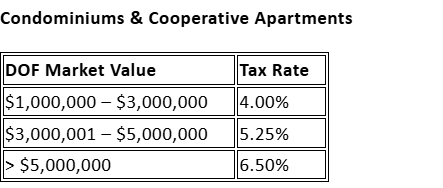
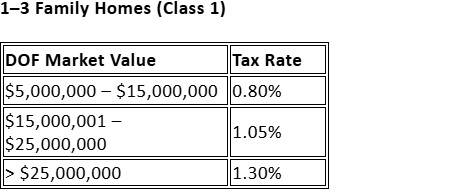
Phase I: Condos, co-ops, and 1-3 family homes will use the current DOF market value (see charts below)
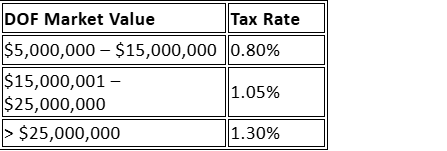
Phase II: The goal is to move closer to actual market value.
PHASE I:
July 1, 2026 - June 30, 2028
Based on estimated market values
PHASE II:
Beginning July 1, 2028 Closer to actual value
If we were to use a specific example, an Upper West Side condo that last sold for $6.5M has an estimated market value of $1,806,911, according to the NYC Department of Finance. That home is being used as a secondary home.
In Phase I, the additional tax due for this unit would then be:
$1,806,911 x 4% = $72,276 per year
In Phase II, the additional tax due would be based on that apartment’s sale or market value. For this example’s sake, let’s assume the apartment held its value at $6.5M.
$6,500,000 x 0.80% = $52,000 per year
This is just based on what was announced yesterday. I’m sure we’ll be hearing more, especially as it relates to co-ops, since the evaluations for those can be more complicated.
If you own a secondary home in NYC, do you know what value the Department of Finance is using?
That is the first number I would check.
If you want to find out the Department of Finance’s Market Value for your secondary home, reach out to Cindy Gokay.
Please confirm all legal, tax, and financing matters directly with your attorney or accountant.